Blogs
Best HIMS Software: A Complete Guide for Modern Hospitals
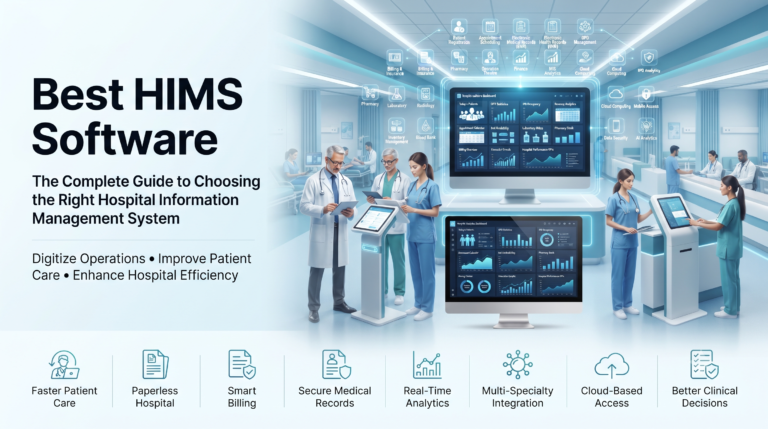
The medical facilities are under a lot of pressure at the moment. They are constrained by limited resources and must make do with less. This would include having to make more and more errors when sending out bills, have shorter queues, and ensure that the patient is better. Not using registers and spreadsheets that are interconnected is not going to work. The Best HIMS Software is thus a critical choice for hospital administrators or anyone who invests in healthcare.
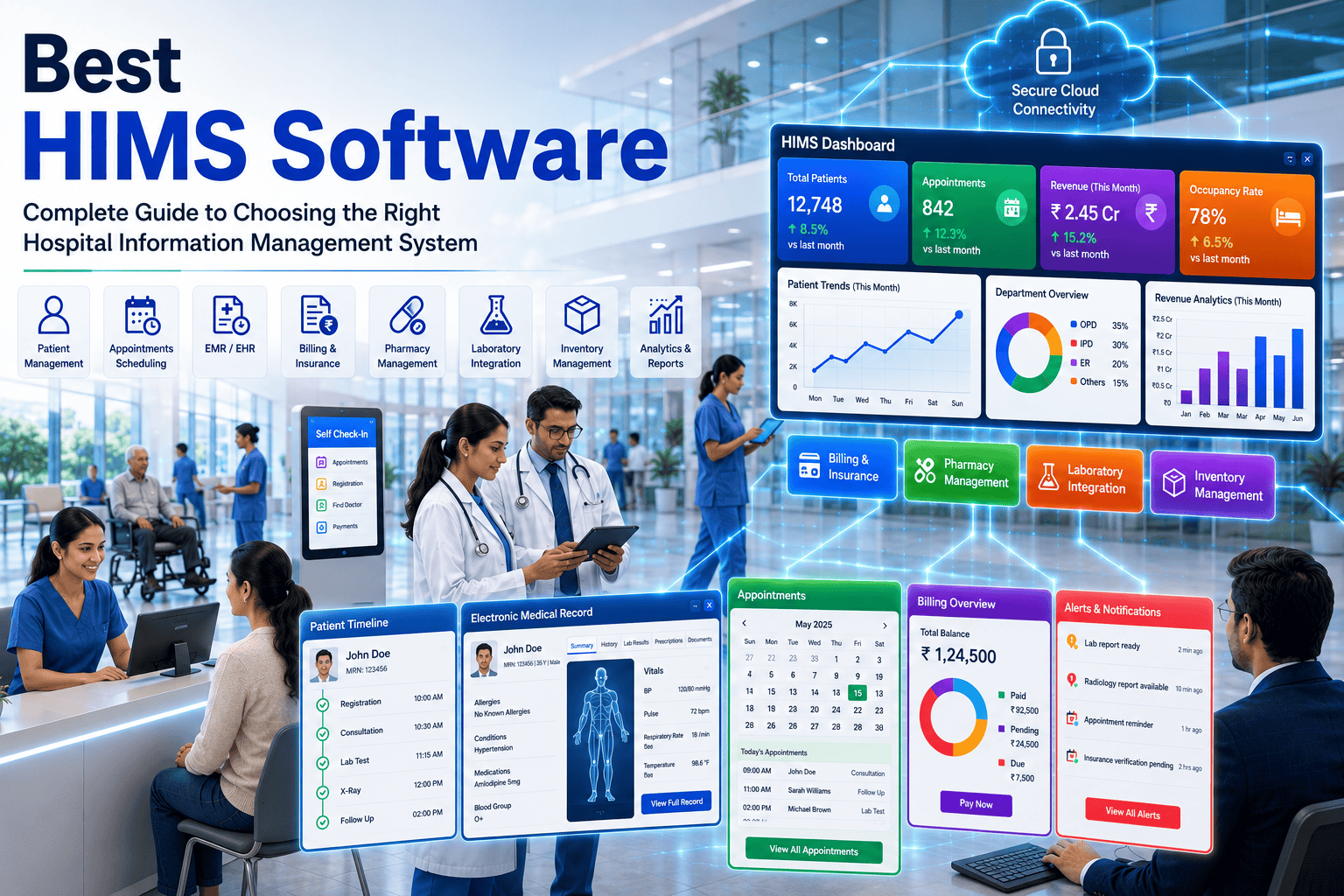
A Hospital Information Management System (also known as HIMS or HMIS) is a system that connects all the various departments of a hospital to a single platform. This includes the reception and the pharmacy counter. The staff can find the information they need on the fly from paper files.
In this guide you will learn what is HIMS software, why it is important and what are the features that make one HIMS software better than the other. You will also get acquainted with the way the companies that create this software grade themselves prior to signing contracts with them. As an example of a good & modern system, we will be looking at PACE HIMS ERP Software developed by Pace Softronix Pvt. Ltd. This will enable you to see what HIMS software can do and how it can assist the hospitals.
What is HIMS Software?
A Hospital Information Management System (HIMS Software) is a digital platform that combines the clinical, administrative, and financial aspects of the hospital into one. The hospital that is using HIMS would store all its information in a single database, rather than maintaining separate registers for OPD visit, lab results, billing, and inventory.
A Hospital Information Management System's primary purpose is to minimize redundant efforts. You shouldn't have to re-type the information when a patient registers once, and the information should be visible to the consulting doctor, the pharmacist, and the billing counter.
Some of the most important functions of any Hospital Management Information Software are the ability to keep accurate records, provide timely services, comply with regulations and coordinate with various departments. In addition, digitization lowers the possibilities of missing files, faking handwriting and billing errors common in paper hospitals.
Why Hospitals Need the Best HIMS Software
Hospitals are not just meant for patients to come to; they should be just as convenient as a bank or airline. Patients today expect the same convenience from hospitals as they receive in banks or airlines, quick check-ins, transparent billing, and minimal waiting time. This expectation is virtually unachievable without the proper technology.
Here are some of the things a good system will likely enhance:
By reducing the number of times patients have to ask the same questions at each counter and the wait in line, fewer resources are required to handle customer satisfaction.
Selecting the best hospital information management system is not a mere IT upgrade, but it also has a direct impact on patient trust, employee morale, and the hospital's profitability.
Essential Features of the Best Hospital Information Management System
Not all Hospital Information Management Systems are created the same way. It is important to know what modules of a Hospital Information Management System (HIMSS) are essential to hospital operations before comparing Hospital Information Management System vendors.
Hospital Information Management System Modules
- Patient Registration – getting patients to hospital promptly and correctly at the front desk
- Appointment Scheduling – this will eliminate the scrambling around of people walking in, and the number of people who don't show up.
- Out Patient Department Management – It is used for handling all the consultations, follow-up and also it is used for handling queues.
- Inpatient Department Management – this includes the follow up of the patient from admission to assigning a bed, discharging and summarising the stay.
- Electronic Medical Records and Electronic Health Records – These are the files containing information about the patient's ailment and what prescriptions the doctor has given and what care the patient has undergone.
- ICU Management – keeps track of patients who are quite ill and provides live monitoring data.
- Nursing Management – this will assist the nurses to coordinate their rounds and medication plan and allow them to keep track of the patients vital signs.
Diagnostic and Support Modules
- Laboratory Management – this logs samples from collection to delivery of the report;
- Radiology Management – it becomes digital and is easier to request images and store reports.
- Pharmacy Management – This is the direct linkage of prescriptions to the time of dispensing and it also tracks the stock.
- Blood Bank Management – keeps donor records and the inventory of blood banks safe.
- Operation Theatre Management – this schedules procedures, and also tracks how much the operating theatre is being used.
Administrative and Financial Modules
- Billing and Insurance – this will automatically charge patients and process insurance claims.
- Inventory Management – helps to avoid the hospital from going out of stock and also prevents medicine from expiring.
- Financial planning – it assists the hospital in monitoring their finances and making sure they have enough money available to cover their costs and expenses
- Human Resources and Payroll – this can assist in managing working and not working times and also payroll.
- Management Information System Reports and Dashboards – a clear view for those in charge of what is going on in the hospital.
Technology and Security Features
- Mobile Access – this is to ensure that the doctors and administrators can access the data when they are not, in the hospital.
- Cloud Deployment – this minimizes the cost of implementation of the system.
- Multi-location Management – it assists in the case of the hospital having multiple branches.
- Role-based Security – ensures that the data is accessible only to the appropriate individuals
- Data Backup and Audit Trail – this safeguards data records and also maintains a record of what transpires in the system.
An all-in-one Hospital Information Management System gathers all these features instead of hospitals having to rely on numerous tools.
Benefits of Hospital Management Information Software
The advantages of usage are not only that it's easy to use, but:
Why Choose PACE Softronix HIMS Software?
PACE Softronix Pvt. Ltd. offers tailored healthcare solutions specifically designed for complex, high-volume environments.
 Our modular system allows hospitals to implement what they need now and scale smoothly in the future.
Our product suite includes:
- PACE HIMS ERP Web / Trust Hospital ERP Software: High-performance enterprise platforms for flagship multi-specialty operations.
- Multi-specialty Hospital ERP Software & Clinic Management Software: Scalable solutions suited for mid-tier facilities and expanding healthcare networks.
- Specialized Standalone Systems: Includes Laboratory Management Systems, Pharmacy Management Systems, and integrated HRMS & Payroll Management Software.
What Sets PACE Softronix Apart?
Cloud-Native Architecture
Removes the need for expensive on-premise servers and IT maintenance teams.
User-Friendly Interface
Designed with intuitive layouts to minimize training time for healthcare professionals.
Customizable & Secure
Works according to your hospital's specific protocols while ensuring strong data encryption.
Dedicated Implementation Support
Offers complete onboarding and reliable technical support to keep your operations running continuously.
The Future of Digital Hospital Management
The next generation of hospital management depends on smart, interconnected healthcare ecosystems.
 Future tools include predictive AI models for forecasting patient admissions, machine learning for detecting billing anomalies before submission, and IoT devices that feed real-time patient vitals directly into the EMR. Embracing a scalable, open web architecture ensures your hospital remains compatible with these emerging technologies.
Conclusion
Moving to a robust HIMS Multi-speciality Hospital ERP Software is a strategic investment that improves operational efficiency, protects revenue, and enhances patient care.
 By automating routine administrative tasks and centralizing clinical data, medical teams can focus on what matters most: saving lives.
Looking for a reliable HIMS Multi-specialty Hospital ERP Software solution?
Contact PACE Softronix Pvt. Ltd. today for a personalized demo and discover how our cloud-based HIMS software for multi-specialty hospitals can transform your healthcare organization.
Frequently Asked Questions (FAQs)
What is HIMS Multi-specialty Hospital ERP Software?
It is an integrated software platform that connects and automates a hospital’s clinical, financial, and administrative departments such as OPD, IPD, Billing, Laboratory, and Pharmacy into a single digital ecosystem.
How does cloud-based HIMS software for Multi-specialty Hospitals improve hospital operations?
Cloud-based software allows secure remote data access for clinicians, eliminates the need for expensive on-site hardware, enables automated data backups, and seamlessly connects multiple hospital branches.
What modules are included in HIMS ERP Web?
Standard implementations include Patient Registration, Appointment Scheduling, EMR, OPD/IPD Management, OT Planning, Laboratory Information Systems (LIS), Pharmacy Inventory, Automated Billing, and HR/Payroll.
Is PACE Softronix HIMS Software suitable for NABH accredited hospitals?
Yes. The software includes built-in workflows that support NABH compliance, including electronic tracking of patient records, structured audit trails, safety checklists, and automated statutory reporting.
Can this system manage multiple hospital branches?
Yes. The HIMS ERP Web architecture allows hospital groups to manage multiple branches, centralized pharmacies, and cross-location laboratories from a single master management dashboard.